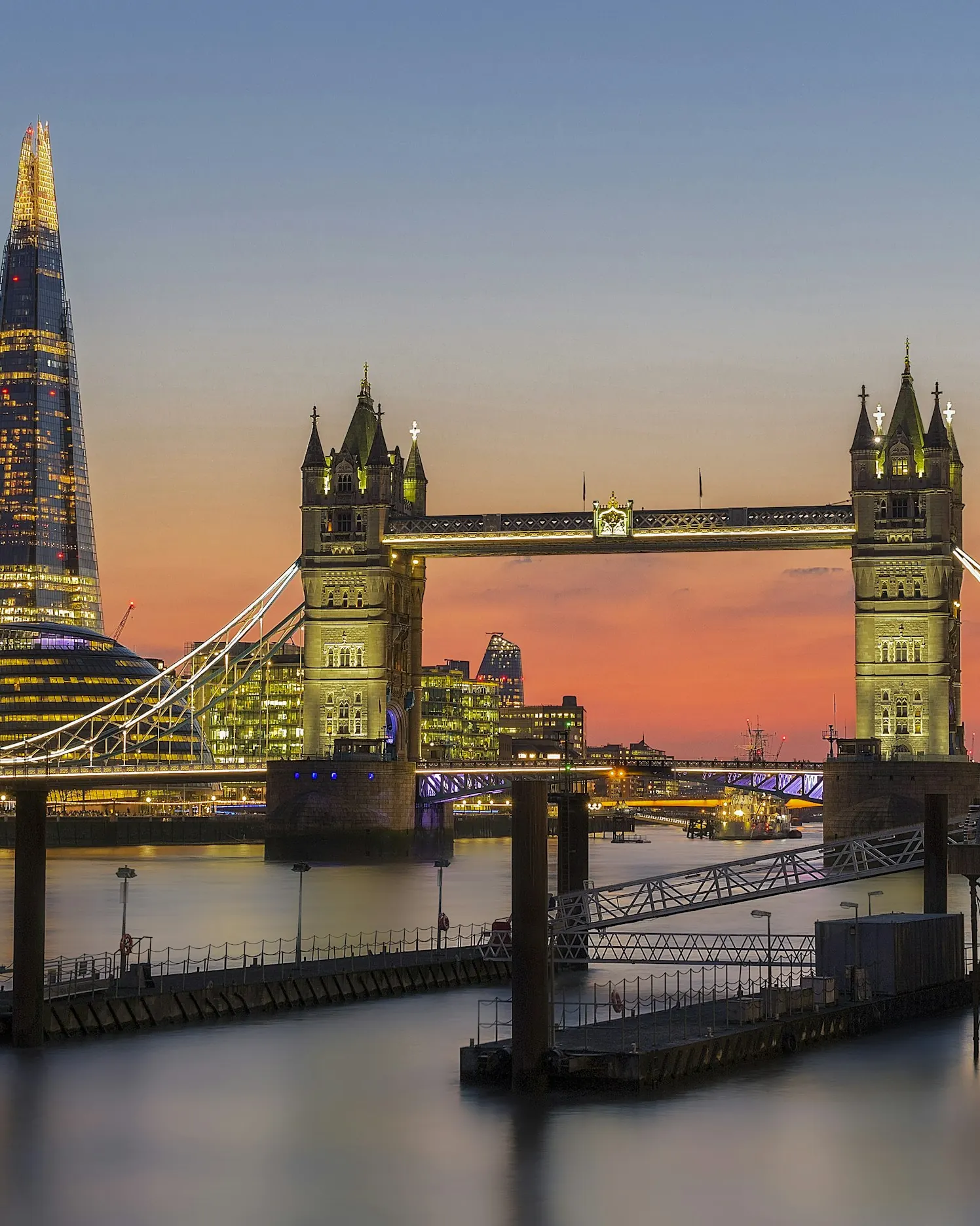
Departing London
London
Farnborough, Luton and Biggin Hill handle most long-range private departures: dedicated terminals, short formalities and runways built for transatlantic jets.
- Farnborough FAB
- Luton LTN
- Biggin Hill BQH

Farnborough · Luton · Biggin Hill to Teterboro · White Plains · JFK
Nonstop when the aircraft and the winds allow, with a planned fuel stop when they do not. Every option priced all-in by one charter advisor.
Each option arrives as one figure for aircraft, crew, taxes and fees, with any variable costs named at the outset.
From your first message to the moment you step down in New York, you deal with the same person.
FAA Part 135 operators, or their UK and European equivalents, fly every crossing we arrange.
No card to buy, no deposit and no sign-up before you ask what a crossing costs.
Departing London
Farnborough, Luton and Biggin Hill handle most long-range private departures: dedicated terminals, short formalities and runways built for transatlantic jets.

Arriving New York
Teterboro sits about 12 miles from Midtown and has no airline traffic. White Plains suits Westchester and Connecticut; JFK suits onward international connections.

The crossing
London to New York is roughly 3,000 nautical miles on the map. Flying west into the prevailing winds, an aircraft needs a good deal more range than that to arrive with proper reserves.
Route distance, about 3,000 nmBars: typical maximum range, 0 to 8,000 nm
Aircraft
Smaller aircraft still have a role on either side of the ocean. For the crossing itself, range and cabin comfort over seven or eight hours decide the choice.
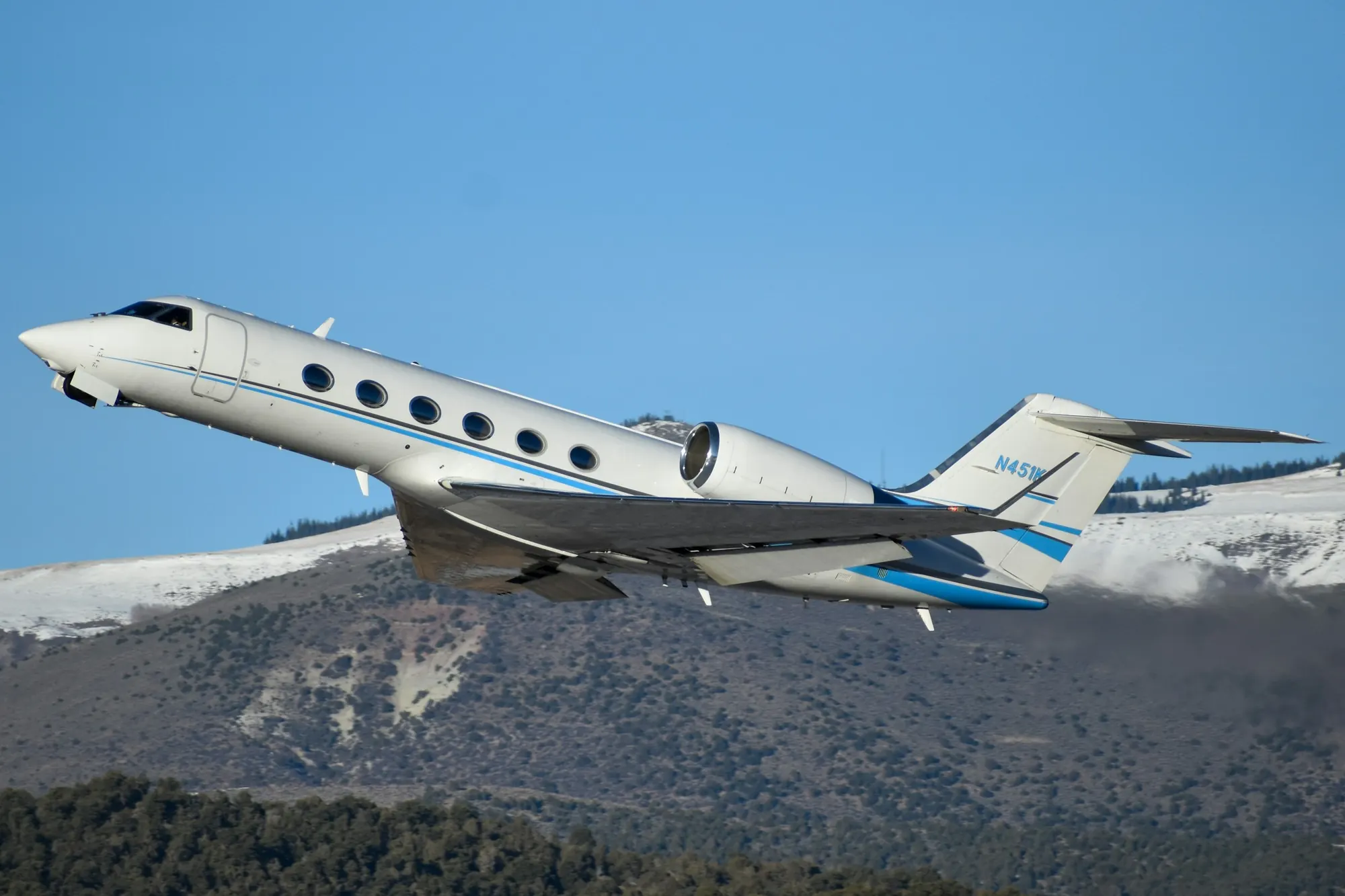
Nonstop eastbound, often westbound
Challenger 350, Citation Longitude and Praetor 600 class. The usual choice for smaller groups; the longer-range models often cross nonstop both ways.
$6,500–9,500per hour
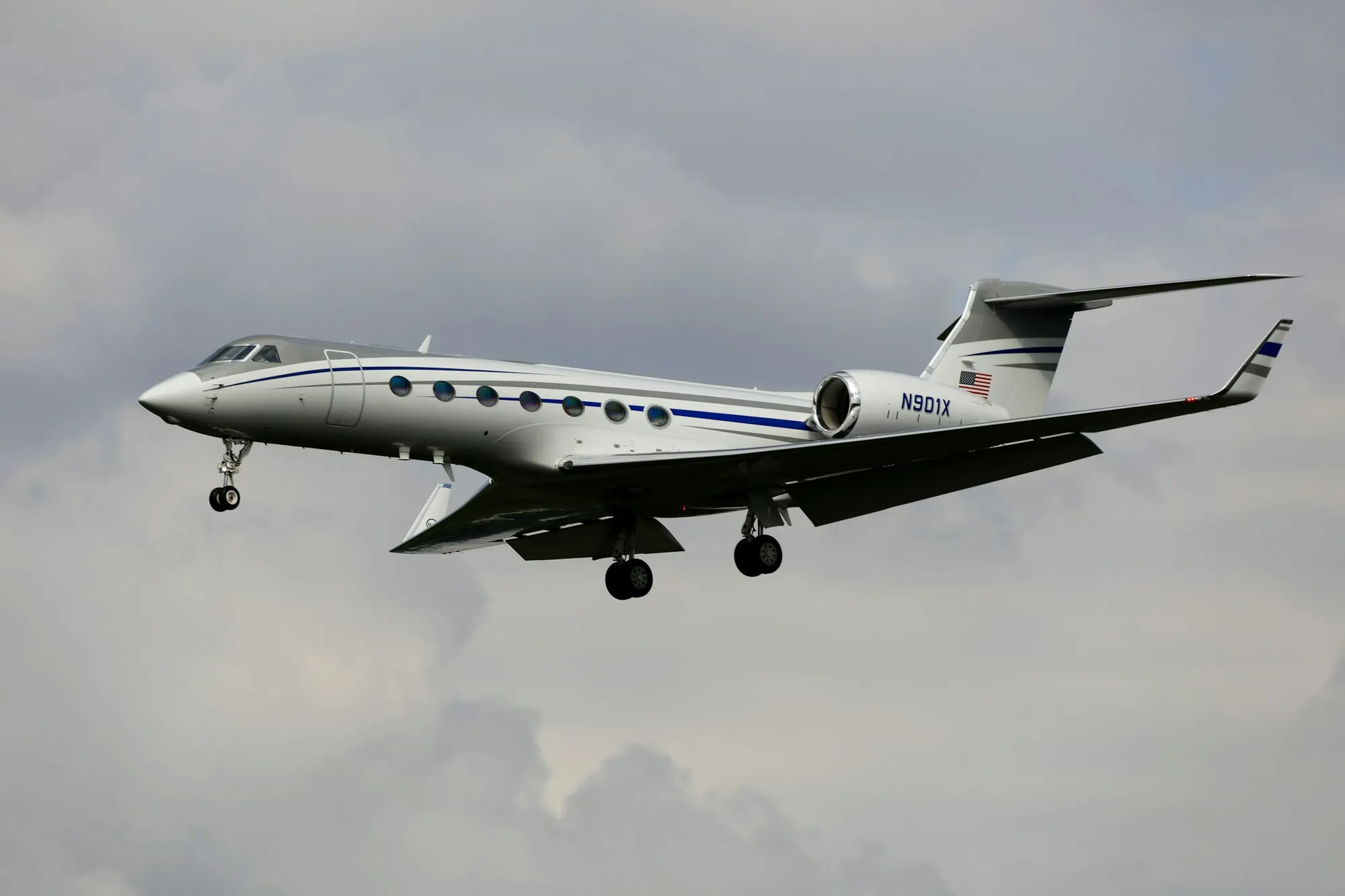
Nonstop most days
G450, Challenger 650 and Falcon 2000LXS class. Ten or more seats, a stand-up cabin and the range to fly west into a headwind on most days.
$8,500–13,000per hour
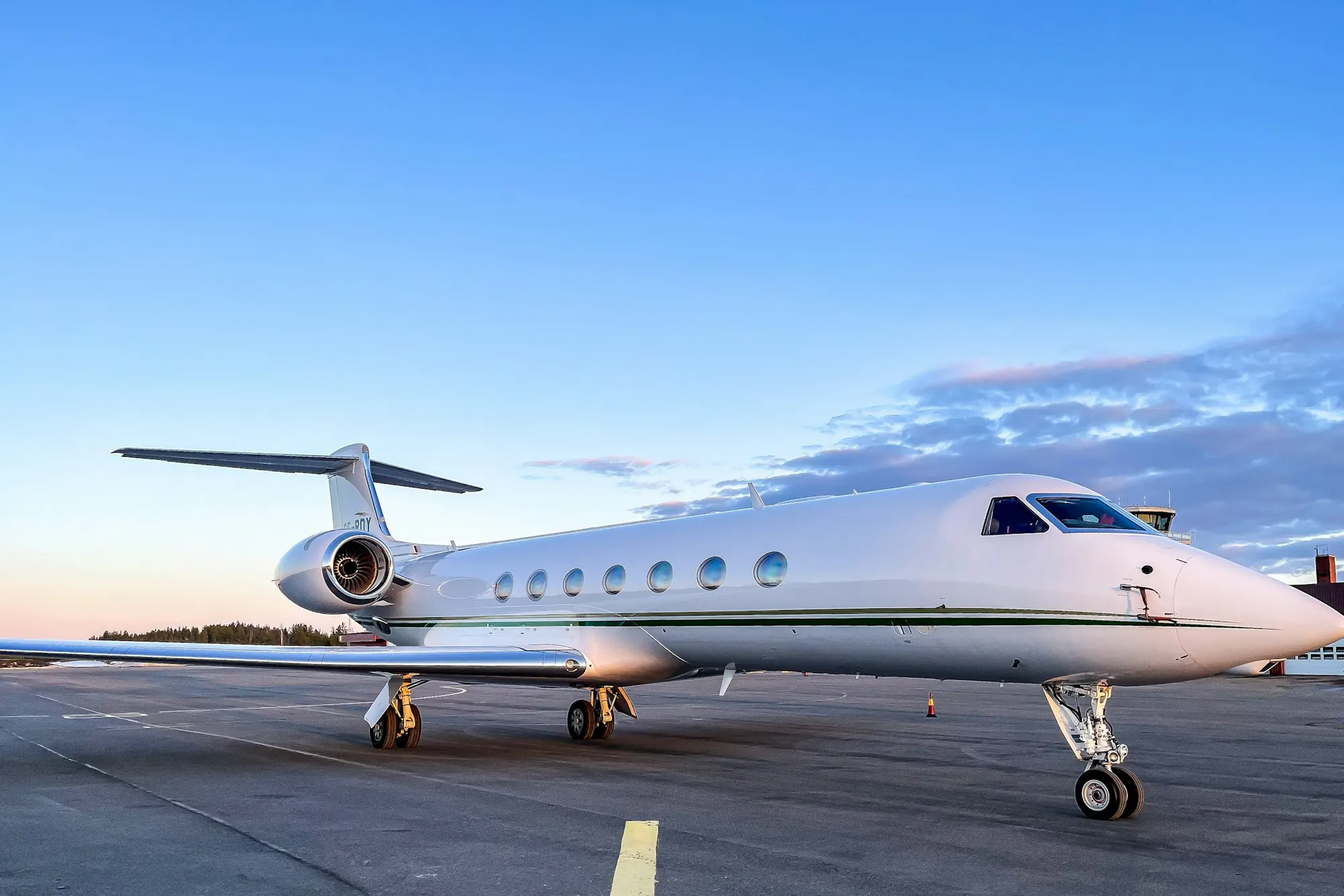
Nonstop with margin
G650ER and Global 7500 class. Range to spare, so load and weather rarely constrain the crossing. Space for up to 19 passengers.
$12,000–20,000+per hour
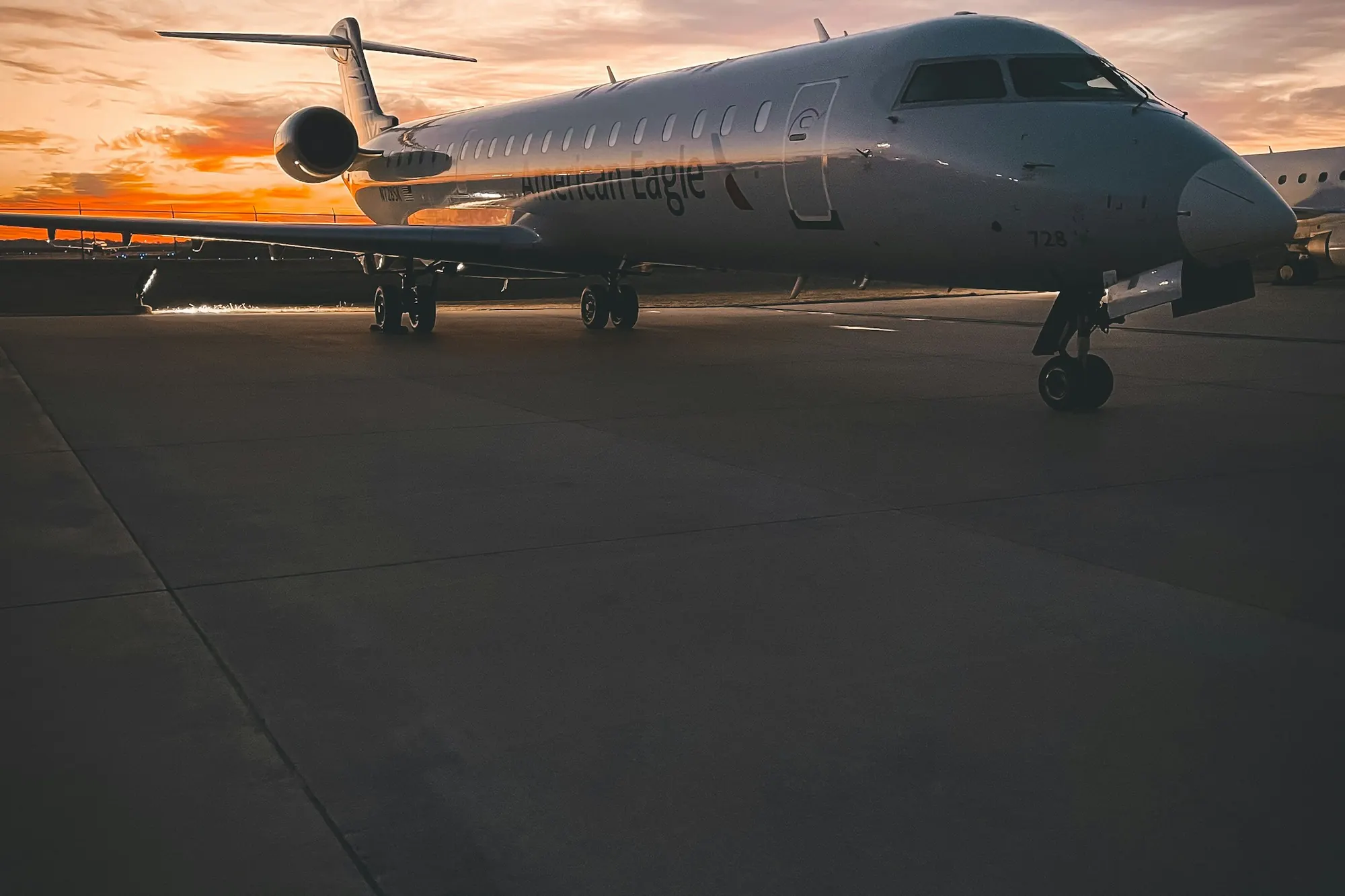
Crossing with two stops
Citation XLS+ class. Can cross via Iceland and Canada, but slowly. Best kept for the European or American side of a longer journey.
$4,500–7,000per hour
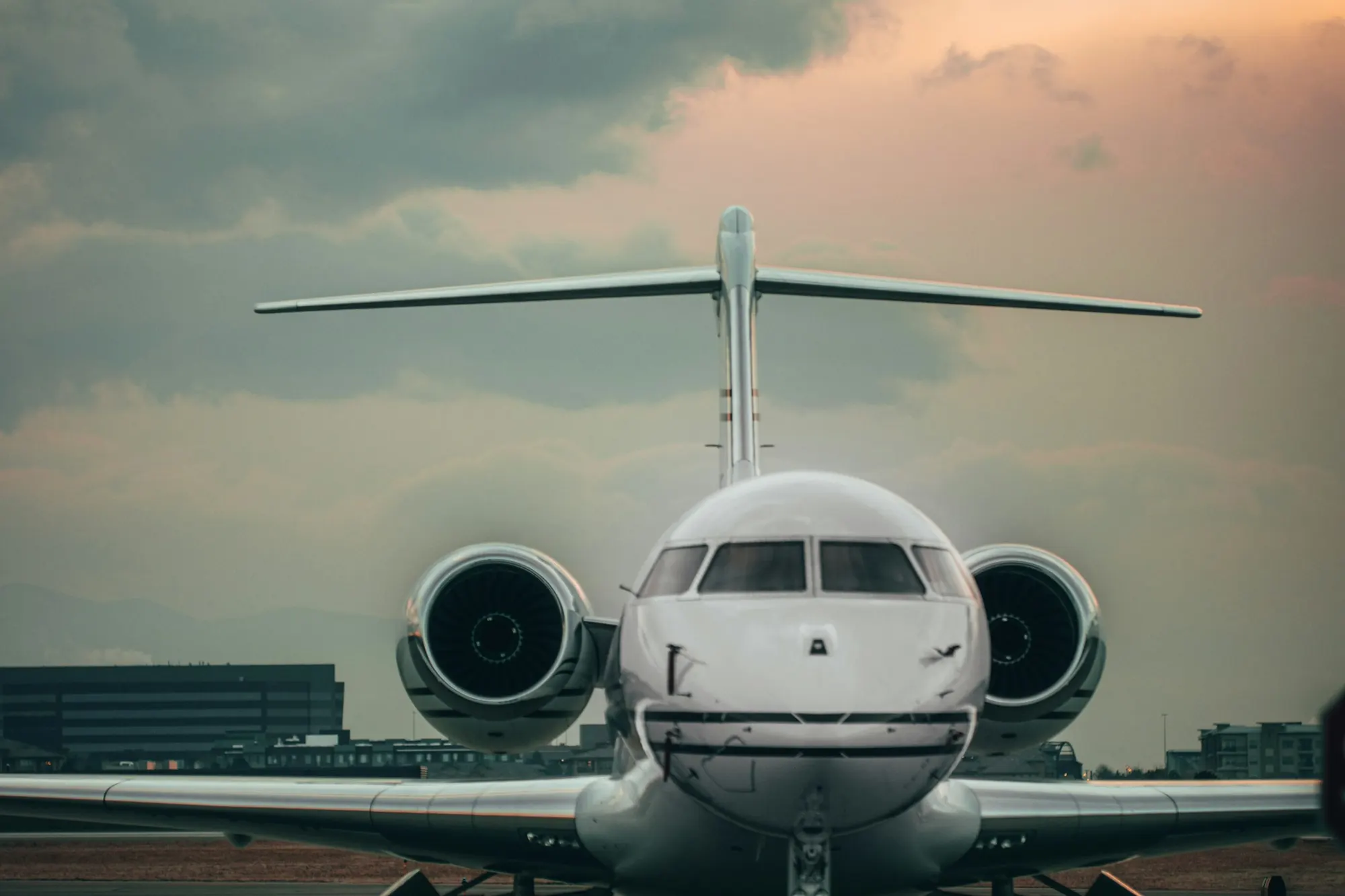
Onward legs
Phenom 300E and Citation CJ4 class. Not a crossing aircraft, but ideal once you land: Teterboro to Nantucket, or Farnborough to the south of France.
$3,500–5,500per hour
Onward legs
PC-12 and King Air 350 class. For short connections at either end, such as an island hop after the long flight.
$1,800–3,200per hour
Hourly figures are typical US market estimates before taxes, fees and repositioning. Full aircraft guide
How it works
Dates, preferred airports on each side, passengers, luggage and whether a fuel stop is acceptable.
Your advisor sends aircraft that can make the crossing, nonstop or with a planned stop, each with one all-in figure.
You sign the charter agreement with the named operator and send passport details so border notices can be filed.
Drive to the terminal, board, and clear US customs on arrival at your chosen New York airport.
Safety and standards
We arrange the crossing; a certificated operator flies it and keeps operational control throughout. These are the checks behind every option we send.
US operators hold an FAA Part 135 certificate; UK and European operators hold an Air Operator Certificate under UK CAA or EASA rules.
The North Atlantic has its own airspace and procedures, and the operator must be approved to use them. We confirm it before offering the aircraft.
Where operators hold third-party ratings, such as ARGUS Gold, Gold+ or Platinum, Wyvern Wingman or IS-BAO stage 1 to 3, we say so.
A long day across the ocean must fit legal duty and rest limits. Where it would not, the plan includes an extra pilot or a rest stop, and the quote shows it.
Westbound, London to New York nonstop is roughly 7 h 30 to 8 h 30. Eastbound is usually around an hour quicker thanks to the jet stream. Add about an hour for each fuel stop.
New York is usually five hours behind London, so leave Farnborough mid-morning and you land around lunchtime local time. For a few weeks in spring and autumn the gap is four hours, because the clocks change on different dates.
At your New York arrival airport. The operator sends passenger details to US Customs and Border Protection before departure, so we ask for passport information in good time. Each traveller needs the right entry documents for their nationality.
As a guide, a super-midsize jet for 7 h 30 to 8 h 30 of flight time comes to about $48,750 to $80,750 one way, and a large cabin jet about $63,750 to $110,500, before taxes, fees and any repositioning. Your quote gives the exact figure.
Yes. The price depends on whether the aircraft has work on the other side; if it has to fly home empty, that cost tends to be built in. Transatlantic empty legs do appear, and flexible dates make them easier to use.
Often, with the operator's agreement and the right paperwork. Both countries set entry rules for animals, so start early; the UK rules are on gov.uk.
Crossings
Weather
Why London to New York takes longer than the return, how the jet stream eats into an aircraft's range, and what that means when you choose a jet for the crossing.
Read · 4 min
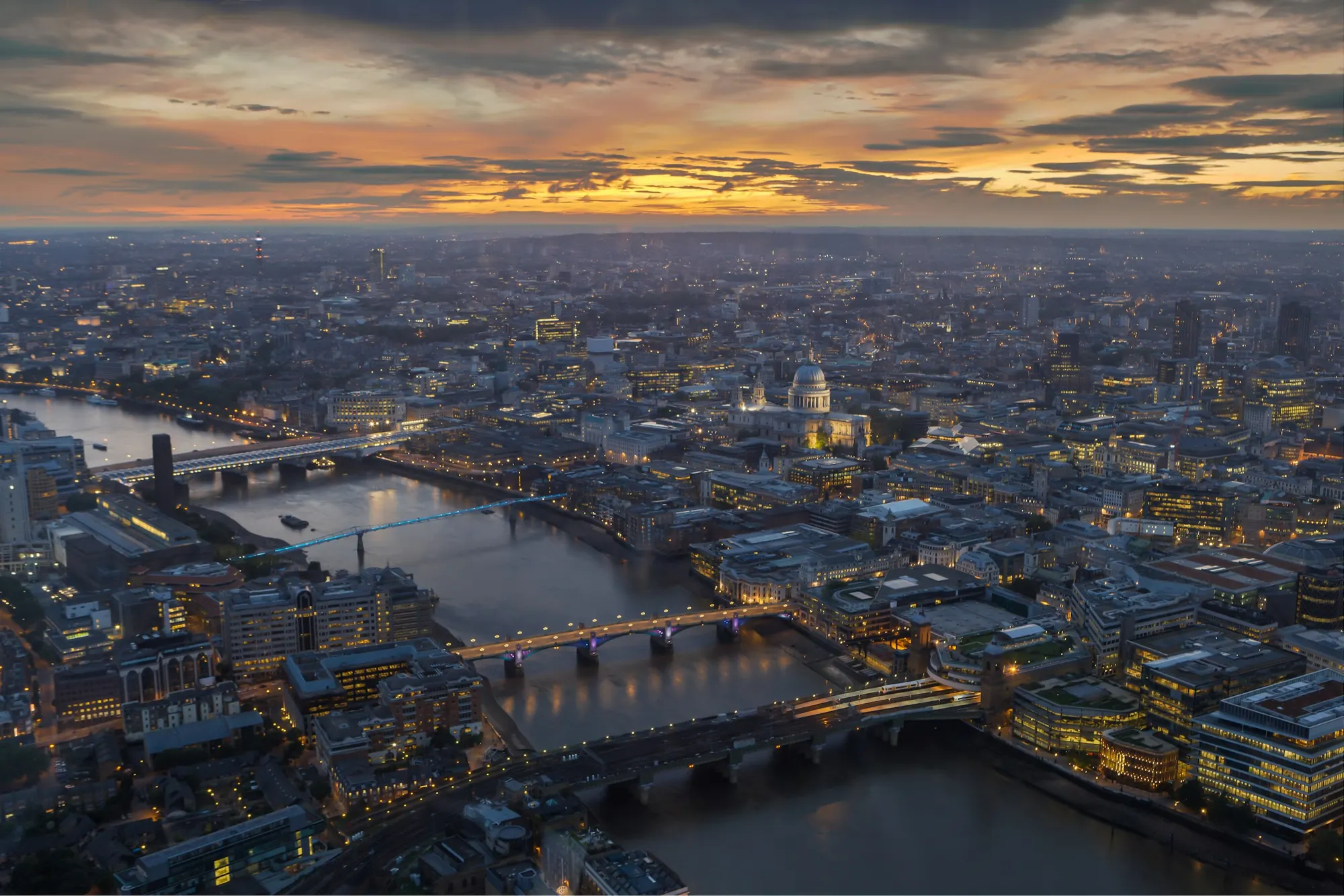
Planning
The trade-offs between flying London to New York nonstop and planning a technical stop: time, cost, comfort, crew hours and what changes in winter.
Read · 4 min

Arrival
How to choose between Teterboro, White Plains and JFK after a flight from London, and what US customs and entry look like on a private arrival.
Read · 4 min

Request a quote
Tell us when you want to travel and who is coming. A charter advisor will email suitable aircraft, nonstop or with a stop, each with one all-in price.


